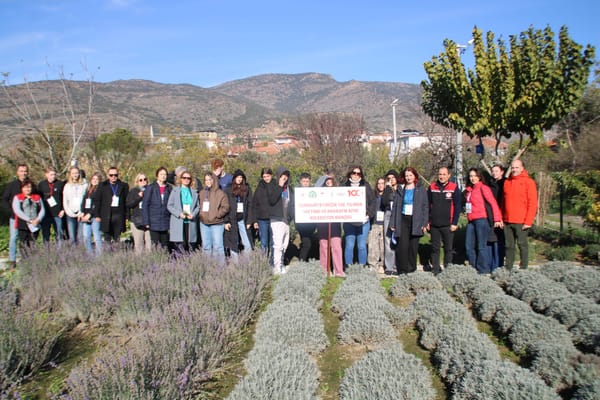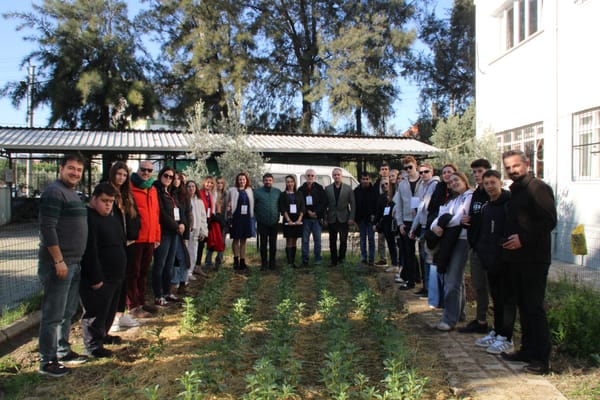
At the Botanical Garden, Stockholm
Teaming up at the Botanical Garden, Stockholm University for inspiration.
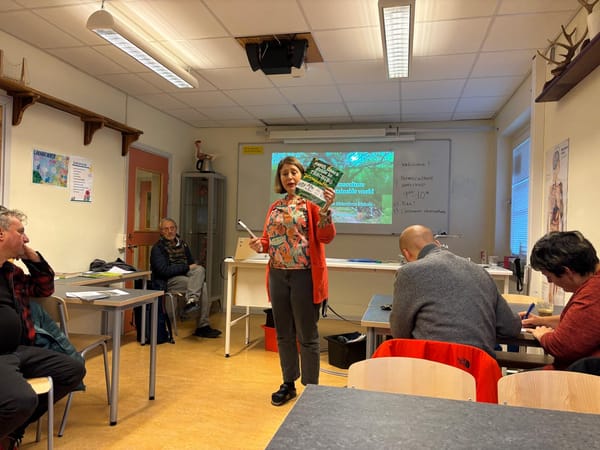
Lecture on permaculture gardening by science teacher Sara at Södertörns friskola.
Together with colleagues from Spain Romania and Turkiye after the lecture on the use of digital media and screen addiction by professor Lisa Thorell at the Department of Clinical Neuroscience, Karolinska Institutet, Solna.
A small garden design plan showing labeled planting areas with lavender, sage, echinacea, roses, and monarda around a central evergreen. A bench and trees frame the space, creating a calm, pollinator-friendly rest area.
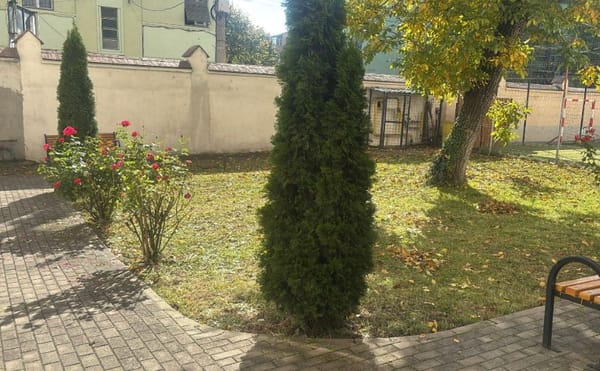
A small enclosed courtyard with a grassy area, paved walkway, and wooden bench. The space includes a few rose bushes, tall evergreens, and mature trees providing shade, creating a quiet and inviting outdoor corner.
Composting household waste is not recommended in an urban environment, as it can attract large numbers of mice and rats. However, near the school in Izmir, there are many stray cats that help keep these pests under control.
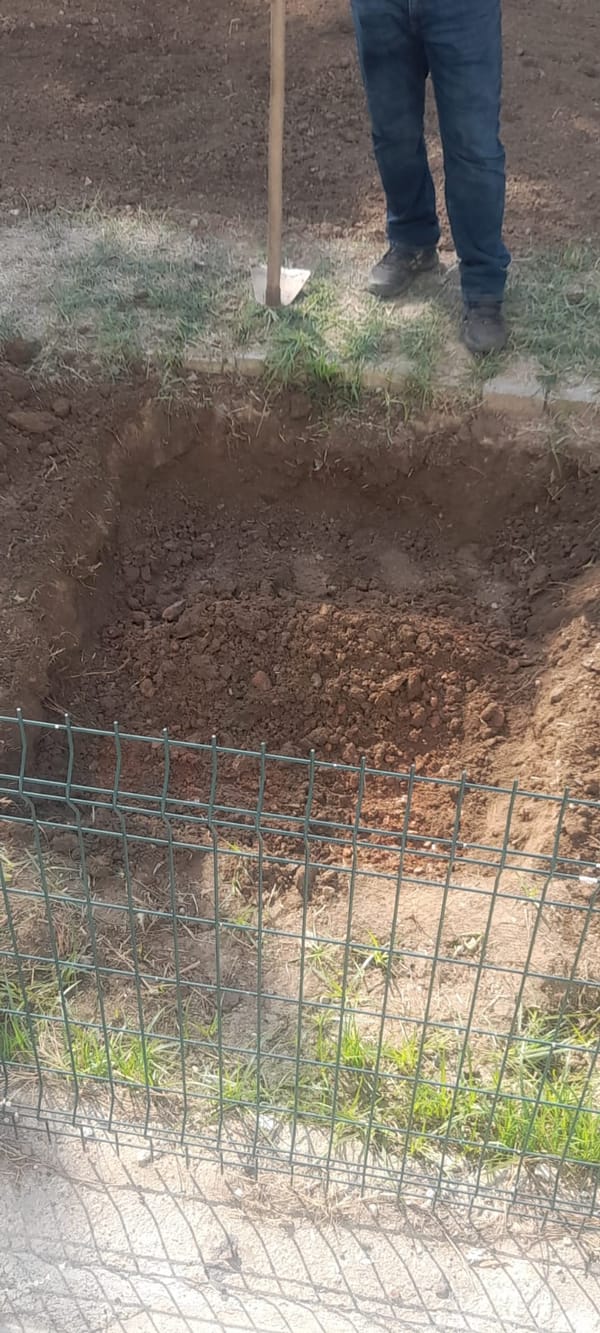
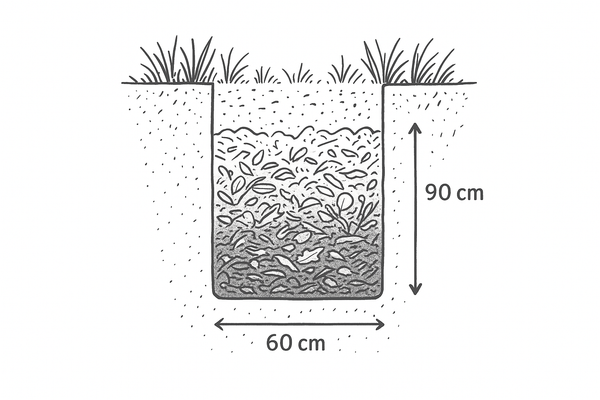
Question: How deep should a compost pit be? Answer: A compost pit should generally be about 60–90 cm deep. That depth is ideal because: It’s deep enough to hold a good volume of organic material and maintain warmth and moisture for decomposition. But not so deep that it
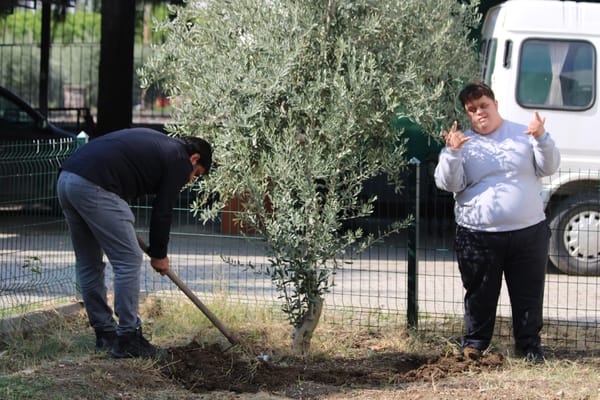
Our tree basins are made together by students and teachers. It’s a hands-on project where everyone takes part in shaping the garden.
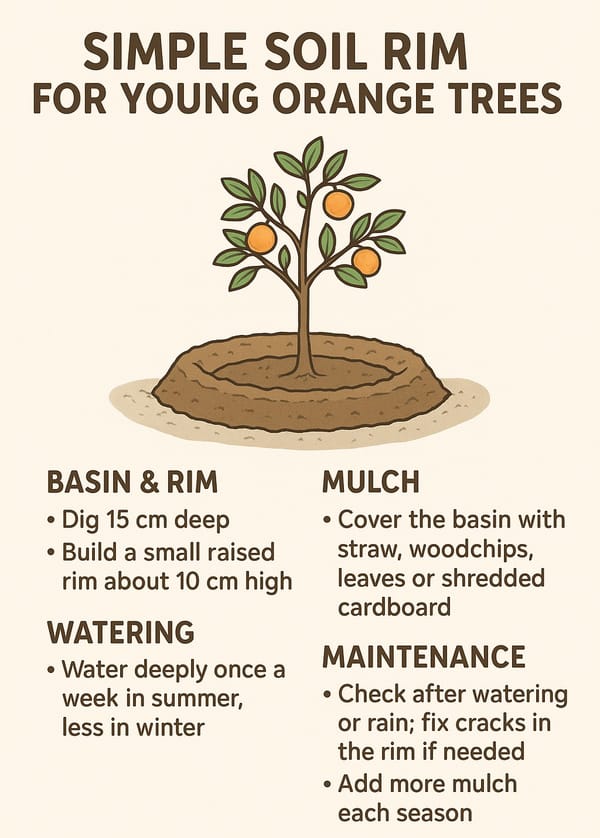
You can generally use the same approach for making a basin and rim (watering ring) for orange trees as for olive trees, but with a few small but important adjustments depending on soil, water needs, and tree age. 🌿 Basic method (works for both) 1. Form a shallow basin around the
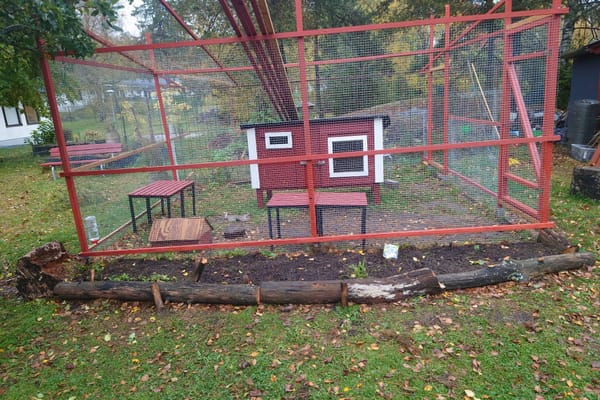
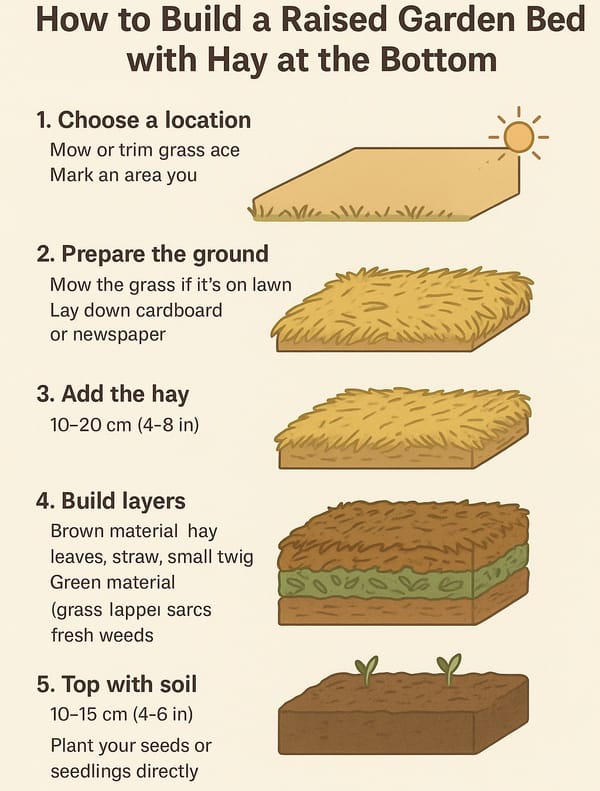
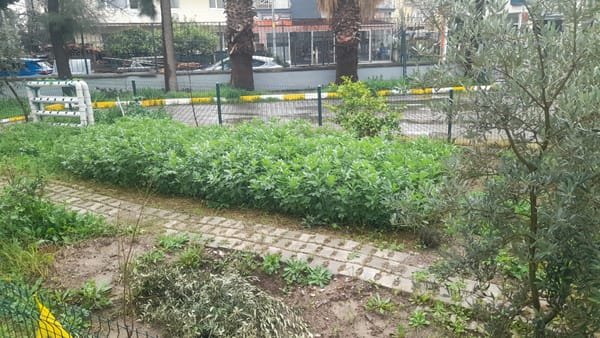
When constructing the raised flower bed, I simplified the usual layering process by omitting some of the intermediate layers. Instead, I placed hay at the bottom to promote aeration and moisture retention, followed by a layer of comfrey to provide nutrients, and then topped the bed with soil. The photo
The plan for a tiny perennial flower bed by the rabbit hutch.
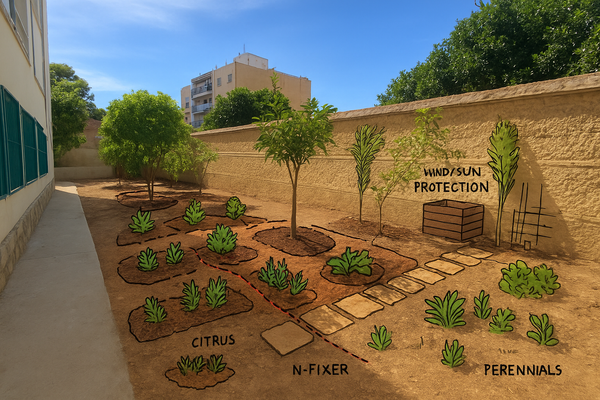
A sketch of an urban Mediterranean garden behind a school in Valencia. The illustration shows raised beds filled with vegetables and herbs, young fruit trees along the borders, and potted plants making use of limited space. Stone paths and tiled corners reflect the courtyard setting, while a trellis and wall
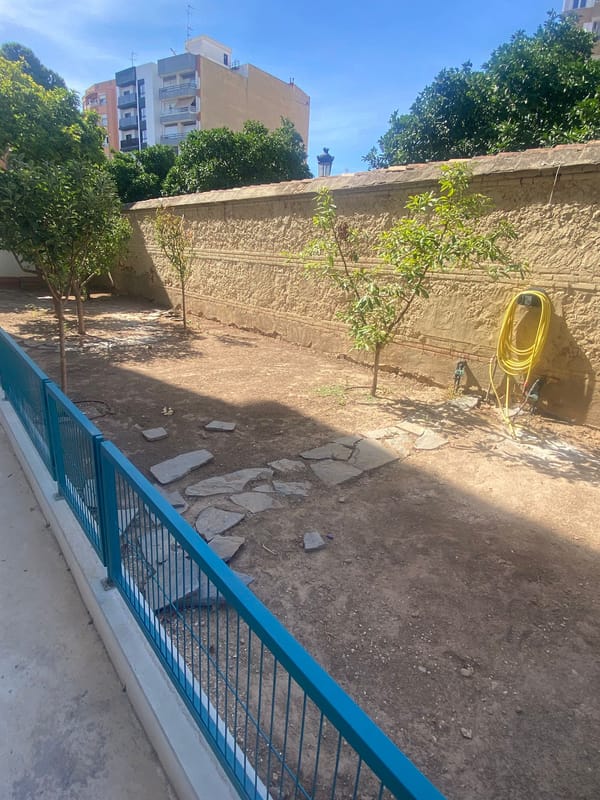
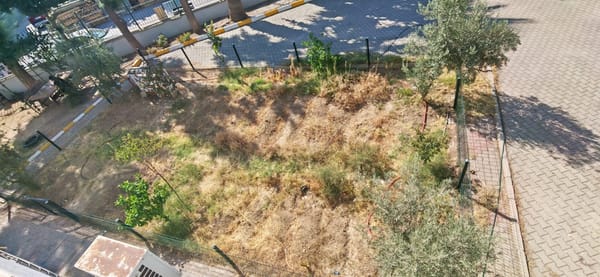
This inner-city schoolgarden faces several challenges: the soil is compacted and dry, shade and sunlight are uneven due to surrounding walls and buildings, and the narrow layout limits planting options. Existing fruit trees create competition for resources, while irrigation appears uneven. Hard surfaces add reflected heat, and the urban setting
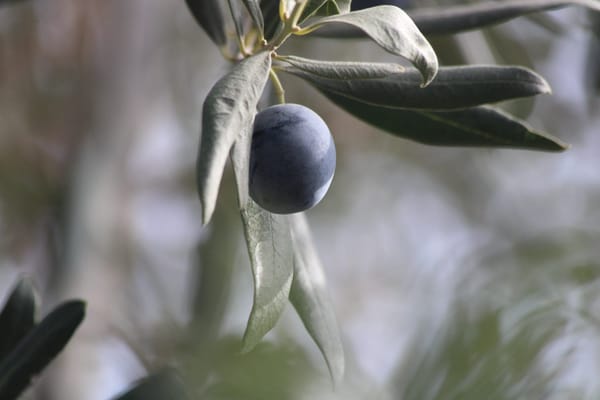
Traditional Turkish Folksong Türkü/Mâni Evlerinin önü zeytin ağacı, Sallanıyor dalları yamacı. Ben sevdim ellerin yavrucuğu, Bilmiyor anam babam, kimsesi. "In front of their house, an olive tree stands, Its branches swaying down the hillside. I have fallen in love with a young beloved from another household, My mother
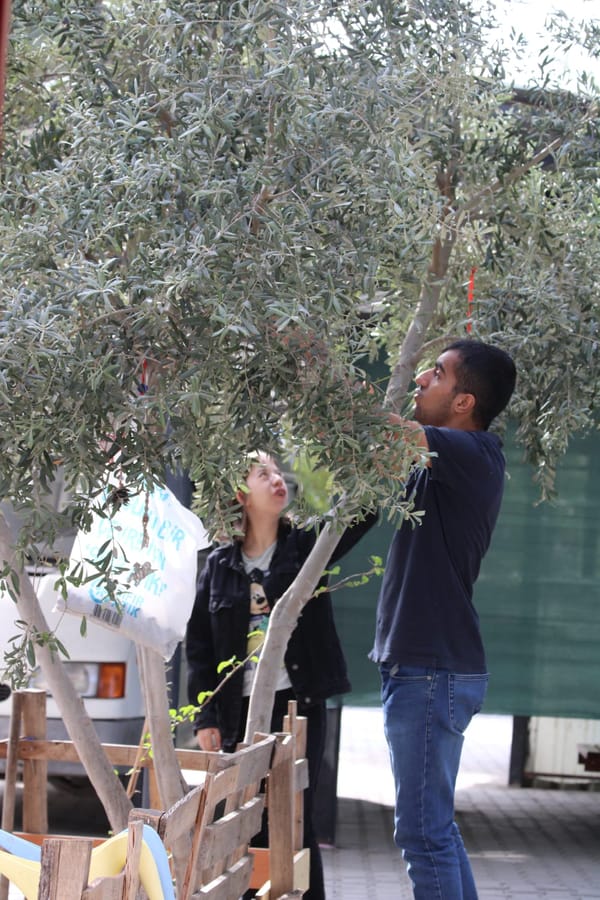
The fact that we had previously cultivated olive trees in the area where we would be implementing our permaculture practices was a surprising gain. Our students were harvesting olives...
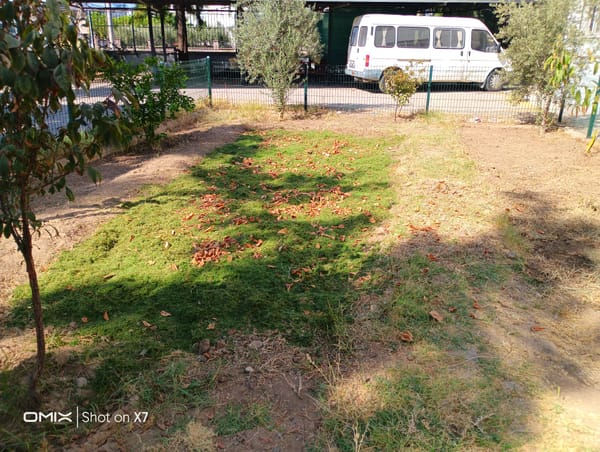
We enriched the soil by mulching with a blend of grass clippings and dry leaves.
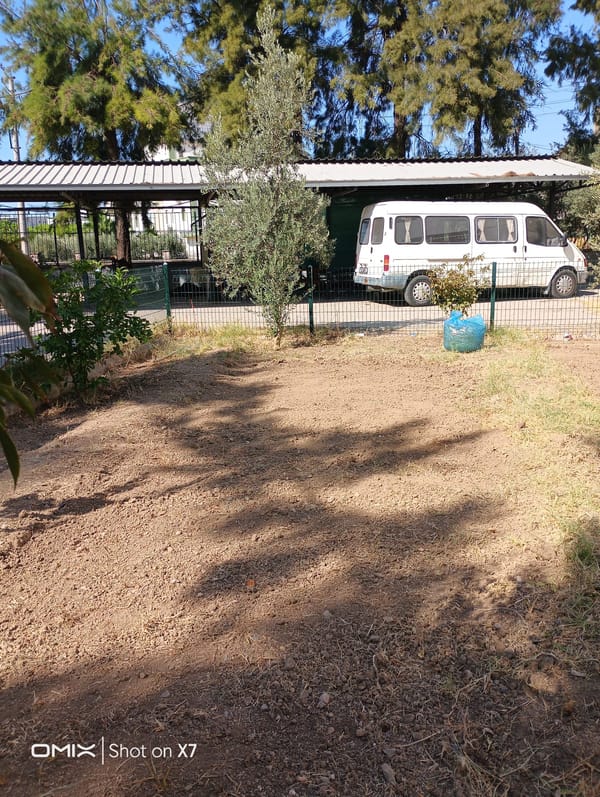
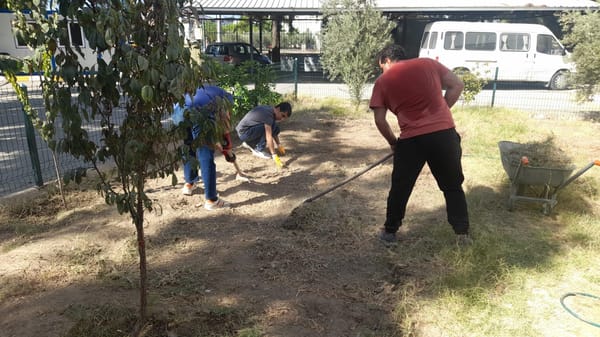
We cleared the site of harmful weeds, creating a healthy foundation for mulching and the implementation of our permaculture practices.
Side by side with our special education students, we explore our permaculture garden and learn different cultivation techniques together.
As Atatürk Organize Sanayil Bölgesi Special Education Practise School, we've set aside a 60-square-meter area in our schoolyard for permaculture practices. We cleared the area where we would implement the permaculture practices from weeds and then mulched it. Photo by Deniz Akkaş
Falling needles from the Pine tree on the raised bed might be a bigger challenge than I thought.
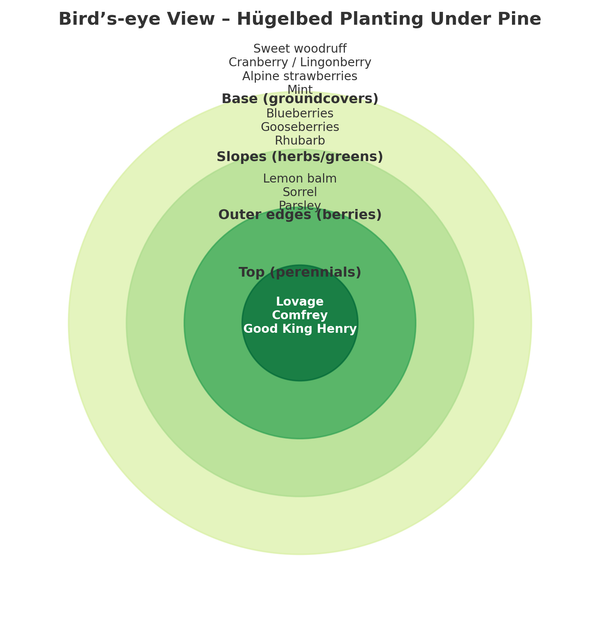
Hügelbed completed.The hügel structure gives you some advantages: better drainage, extra organic matter, and some retained moisture deeper in the mound, which is paramount to the challenge of growing anything beneath a pine tree.
Following the instructions from the Hügel Bed post. First logs, then branches, leaves, green waste, compost and soil on top.
Why a cardboard? It is called a no-dig method. Initially it will cover the ground and the weed growing there. Eventually the cardboard is going to decompose.
🌲Vegetables rarely thrive beneath large pines. 🌲Heavy shade blocks the sun. 🌲Roots steal water and nutrients. 🌲Pine needles make the soil more acidic. 🌲Better suited for acid-loving plants like blueberries or certain herbs. All above is true and the challenge is to grow vegetables and herbs beneath a large pinetree.
Project 2025-1-SE01-KA210-SCH-000356308