Basin & Rim - Plan
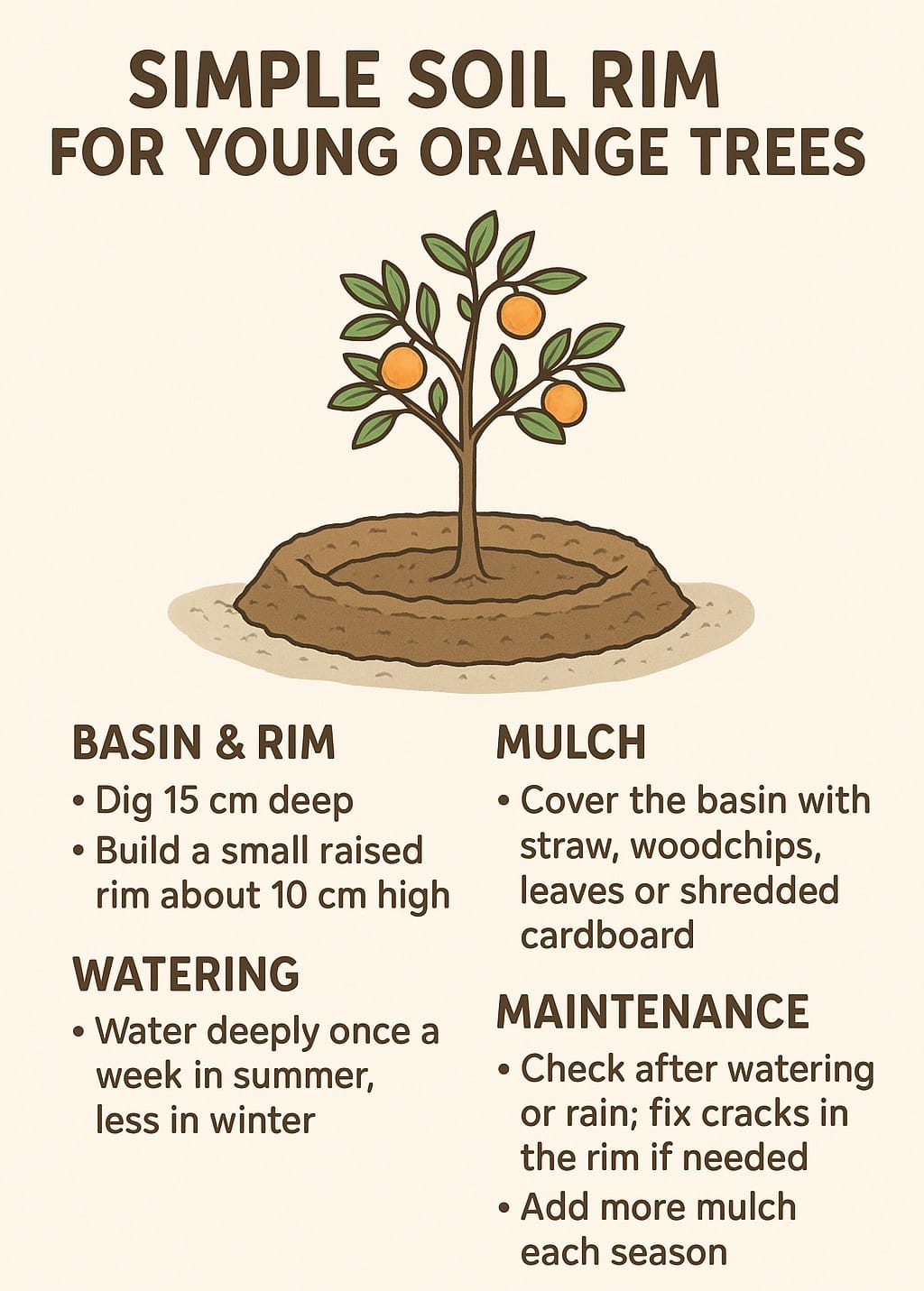
You can generally use the same approach for making a basin and rim (watering ring) for orange trees as for olive trees, but with a few small but important adjustments depending on soil, water needs, and tree age. 🌿 Basic method (works for both) 1. Form a shallow basin around the drip line (the outer edge of the canopy). 2. Build a low earthen rim or berm (5–10 cm high) to hold irrigation water. 3. Fill the basin slowly with water so it soaks deeply into the root zone. 4. Mulch the interior of the basin (straw, leaves, composted material) to reduce evaporation. 🍊 Adjustments for orange trees Watering frequency: Orange trees need more consistent moisture — basins should be refilled more often (weekly in warm weather, sometimes twice weekly for young trees). Basin depth: Keep it shallower and wider than for olives to avoid waterlogging the crown. Mulch: Keep mulch 10–15 cm away from the trunk to prevent fungal issues. Soil drainage: Oranges dislike “wet feet” — ensure the basin drains well if your soil is heavy. 🌳 For olive trees Deeper but less frequent watering: Basins can be slightly deeper, and watering intervals longer (every 2–3 weeks once established). Rim height: Can be a bit higher to hold more water in one go. Soil tolerance: Olives tolerate poorer drainage and drier cycles. If you’re planting both species in the same area, make slightly different basins per tree type — oranges shallower and more often watered, olives deeper with longer dry interval.